
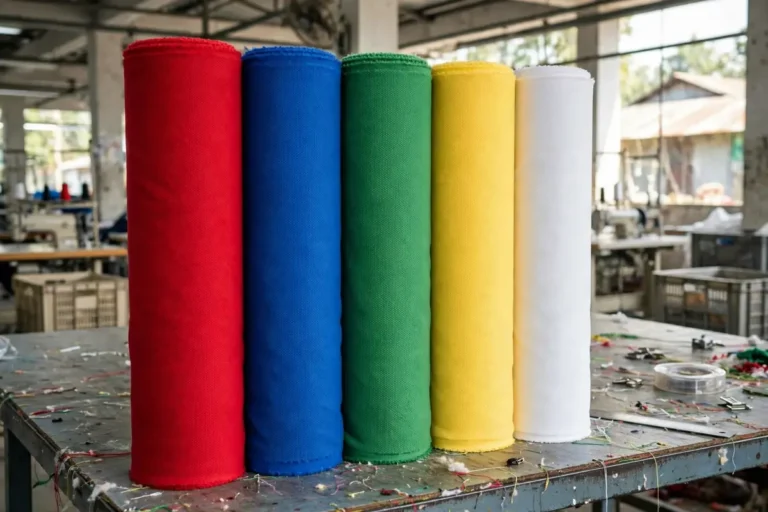
GSM is the first number most buyers ask about when they order polo shirts, and it is often the only fabric number on the quote sheet. It matters, but it does not tell the whole story. Two polo shirts can both say 220 GSM on paper and feel completely different in the hand, wash differently, and last a very different length of time.
This guide is written from the factory floor. It covers what GSM really means, which weights fit which jobs, why the same GSM can feel light or heavy, and the checks that protect you when you order in bulk.
What GSM Means on the Factory Floor
GSM means grams per square metre. It is the weight of one square metre of the fabric, nothing more and nothing less. In the factory we check it with a round sample cutter and a small scale: we cut a circle of cloth of a fixed size, weigh it, and the reading gives the GSM of that roll.

A few things buyers should know about that number:
- No roll of fabric is exactly the same weight from start to end. A fair tolerance is plus or minus 5 percent, and honest factories quote with that tolerance in writing.
- GSM can be checked on the greige cloth or on the finished fabric, and finishing shifts the reading a little. Ask which stage your quoted GSM refers to.
- The number says nothing about the knit, the yarn or the blend. That is why GSM alone is a weak way to compare two factories.
Which GSM Fits Which Polo Shirt
The right weight depends on where the shirt will be worn and how hard it will be washed. These are the ranges we work with every week across our polo shirt lines:
- 160 to 180 GSM: light promotional and event polos. Cool to wear and kind to a tight budget, but not the choice for a garment that must look sharp after fifty washes.
- 180 to 200 GSM: the retail and fashion range. A clean drape, a soft hand feel, and enough body for a clean embroidered logo on the chest.
- 200 to 220 GSM: workwear and staff uniforms that are washed again and again. Most of our uniform polo shirt orders sit in this range, because collars keep their shape and pale colours stay opaque.
- 220 to 240 GSM: heavy premium polos for cool climates and high-end retail. Warm and firm, but slower to dry and dearer to ship.
- 140 to 170 GSM in polyester: sports and team polos, where the weight sits lower because the yarn is different and the shirts must dry fast.
School uniforms sit in the middle of this table on purpose: a school uniform polo at 200 to 220 GSM survives a school year of weekly washing without going thin at the shoulders.
Match the Weight to Your Market's Climate
The same polo shirt sells very differently in a hot market and a cold one, and GSM is where that shows up first. Buyers who sell into warm regions often order too heavy, because heavy sounds like quality in a meeting room. Out on the street, the customer just feels hot.
- Hot and humid markets: stay at 160 to 200 GSM in cotton rich cloth, or lower in polyester sport knits. Air has to move through the shirt, and a lighter cloth also dries on the line in a few hours.
- Mild climates: 190 to 220 GSM is the safe middle. It wears well across spring and autumn and layers under a jacket without bulk.
- Cold markets: 220 to 240 GSM earns its cost. The shirt holds its shape over a vest or thermal layer and does not look thin in winter light.
Climate also changes the washing story. Uniforms in hot countries are washed far more often, sometimes after every single wear. A program that ships to a hot market should buy wash life first and softness second, which usually means the middle of the GSM table in a poly cotton blend rather than a light pure cotton.
Notes for Buyers in the USA, UK and EU
Most of our polo programs ship to North America and Europe, and the same fabric spec reads a little differently in each market:
- USA: fabric weight is often specced in ounces per square yard instead of GSM. The conversion is simple: 220 GSM is about 6.5 oz, and 200 GSM is about 5.9 oz. Write both numbers in your order papers so nothing is lost between the quote and the cutting table. A golf performance polo for the US market usually sits at 160 to 180 GSM, light enough for a summer round and firm enough to hold an embroidered club logo.
- UK: staff uniforms often go through industrial laundry at high temperatures. A poly cotton polo at 200 to 220 GSM holds its size and colour through that treatment far better than a light pure cotton one, which is why most UK uniform programs we run sit in that band.
- EU: buyers commonly ask for OEKO-TEX Standard 100 fabric and dyes that meet REACH rules as a standard part of the file. At goods-in inspection the weight check usually happens next to those papers, so the GSM and its tolerance should be written in the same document set.
Why Two Fabrics With the Same GSM Feel Different
Ask any merchandiser: weight is only one part of how a fabric feels. Three other things change the hand feel at the same GSM:
- Yarn count. Finer yarn knits a smoother, tighter surface. Coarser yarn at the same weight feels rougher and pills sooner.
- Knit type. Pique has the small waffle surface most people picture on a polo shirt. Single jersey is smoother and softer but curls at the edges more easily. Interlock is dense and flat, with a firm feel.
- Blend and finishing. A cotton rich cloth feels soft and breathes well. A poly cotton blend keeps its colour and shape longer. Washing and compacting after knitting settle the cloth and change how it feels in the hand.
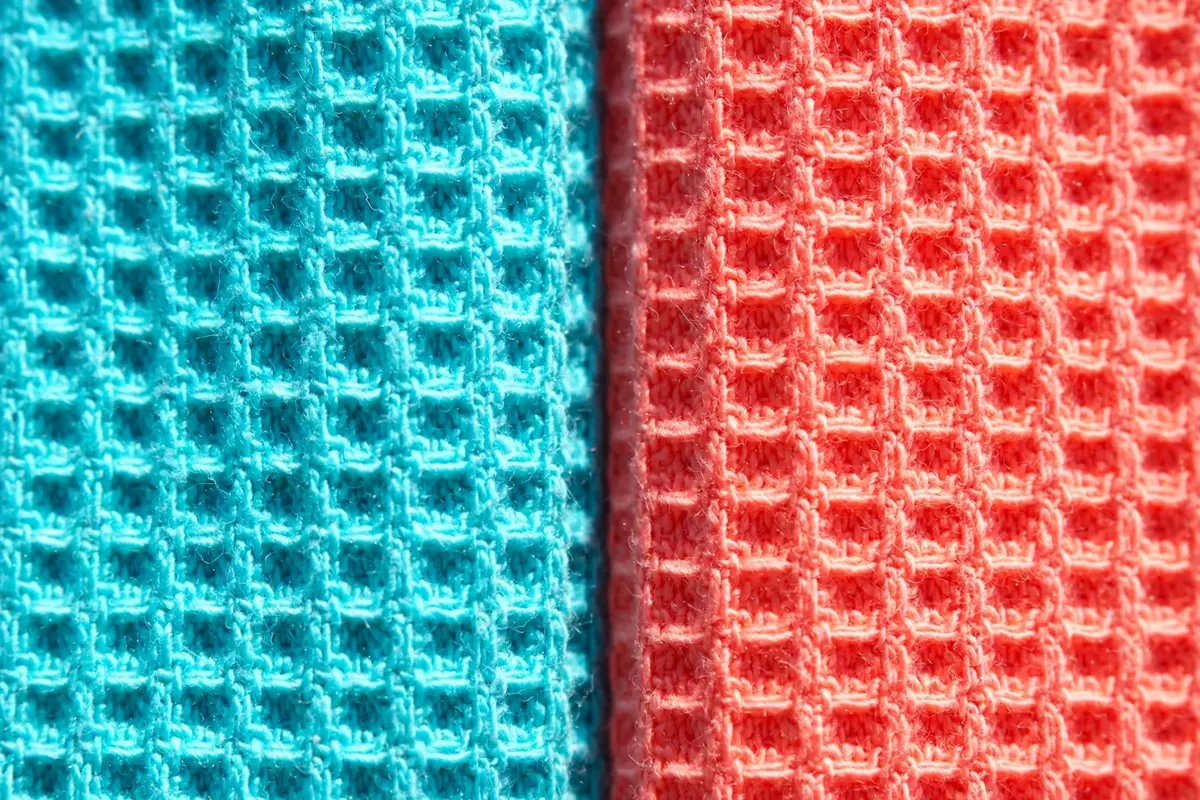
So when you compare quotes, compare like with like: same GSM, same knit, same blend, same yarn quality. A quote that is cheaper because one of these quietly changed is not cheaper at all.
The Part Quotes Leave Out: GSM After Washing
A polo shirt is not worn straight off the roll. After the first few washes the fabric relaxes, the garment settles to its true size, and weak cloth starts to show its age. What to watch:
- Low cost cloth is often knitted loose and then stretched wide during finishing, so it looks fine on the table and shrinks hard at home.
- Collars and cuffs tell the truth first. A well made polo keeps a flat collar after twenty washes; a poor one curls within a month.
- Colour loss is faster on light, loosely knitted fabric, even at the same GSM.
The simple protection is a wash test on the pre-production sample, washed the way the end customer will wash it, before bulk cutting starts.
Check the Weight Yourself Before You Commit
You do not need a factory lab to catch a fabric that is lighter than promised. When the swatch or the pre-production sample reaches your office, run these simple checks:
- Weigh a known area. Cut a 10 by 10 cm square from a spare swatch, weigh it on a kitchen scale in grams, and multiply by 100. That gives a rough GSM, close enough to spot a cloth that is 20 GSM light.
- Hold it to the light. A polo fabric at 200 GSM or above should not show your hand clearly through it in a pale colour. Strong show-through at a quoted 220 GSM means the cloth is knitted loose.
- Stretch and release. Pull the cloth gently across the width and let go. Good cloth comes back flat. Cloth that stays wavy was stretched in finishing and will shrink in the wash.
- Compare against a shirt you trust. Keep one polo from a supplier whose quality you know, and feel the new sample against it. Weight in the hand is hard to fake.
None of this replaces a proper lab report on a big program, and on a first order with a new factory it is worth paying for one. But these four checks take five minutes, and they end most arguments about fabric weight before the bulk is cut.
How GSM Changes the Price of Your Order
Fabric is the biggest cost in a polo shirt, and weight is fabric. A jump from 200 to 230 GSM uses roughly 15 percent more cloth in every shirt, and it also raises the weight of every carton you ship. That is fair when the job needs it. It is waste when it does not.
The trick to watch is the opposite move: a factory quotes a low price and quietly knits the cloth 10 to 15 GSM lighter than agreed. The shirts look almost the same on day one. They do not last the same, and your repeat order will not match the first one. This is why the agreed GSM, with its tolerance, belongs in the order papers and not just in an email.
Buyer Mistakes We See Again and Again
- Asking for a GSM number without naming the knit type, so the factory is free to choose the cheapest cloth at that weight.
- Comparing two quotes by price alone when one is 200 GSM and the other is 180 GSM.
- Choosing a heavy fabric for a hot climate because heavy sounds like quality, then hearing complaints that the shirts are too warm.
- Skipping the wash test and finding the shrinkage problem after the goods land.
- Leaving the tolerance out of the order, so there is no clear line when a delivery comes in light.
What to Write in Your Order
A short, clear fabric line in your order papers prevents most of these problems:
- Fabric weight in GSM, with the allowed tolerance written next to it.
- Knit type: pique, single jersey or interlock.
- Fibre blend, for example 100 percent cotton or 65/35 poly cotton.
- The hand feel you want, matched to a kept sample both sides agree on.
- The wash and colour fastness results you expect on the pre-production sample.
At Shadanatex we knit to the agreed GSM, check rolls with the cutter and scale before cutting, and keep a sample from every batch so a repeat order matches the first. If you are planning a polo program and want a straight answer on the right weight for your market, write to us and we will tell you what we would choose, and why.